CASE STUDY
Switching driven by tolerability and preference: What physicians document when they change covalent BTK inhibitors in CLL/SLL
Situation
A biopharma team needed to understand why patients with chronic lymphocytic leukemia or small lymphocytic lymphoma (CLL/SLL) switch between covalent BTK inhibitors (cBTKis) in real-world practice. Prospective studies have evaluated switching after intolerance, but the real-world drivers behind these decisions remain largely uncharacterized, and trial data did not capture the clinical context of each decision at the point of care.
Our approach
Flatiron's Clinical Decision Insights solution analyzed electronic health record (EHR) documentation for 4,000+ patients reaching their first eligible line (1L) cBTKi therapy for CLL/SLL during a five year period. Using structured data with AI-enabled extraction from unstructured clinical notes, it identified the rationale physicians documented for the patients who switched to a second cBTKi, and compared those drivers across 1L regimens and time periods.
Business impact
The analysis revealed three strategic levers:
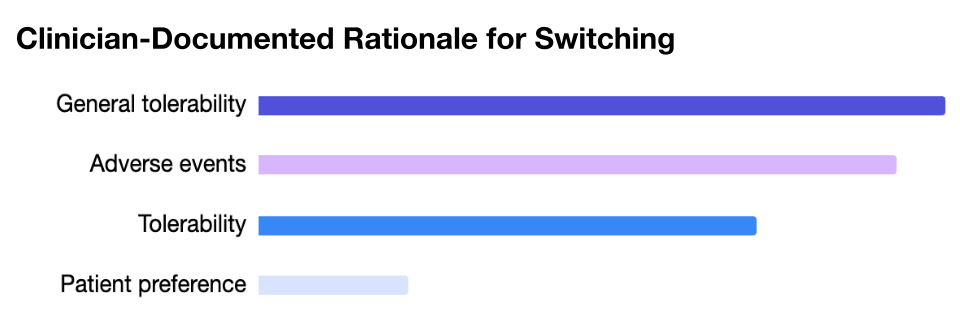
- Tolerability: Tolerability-related considerations, particularly adverse events, were the most frequently documented reasons for switching.
- Patient preference: Patient preference was consistently documented in switch decisions, highlighting its role in treatment selection.
- Switching pattern: Fewer than 10% of patients who started 1L cBTKi switched, and over 40% of switches began on the therapy of interest. The median time from 1L start to switch was about 13 months.
These findings give the team evidence to identify the patient segments most likely to change therapy, equip field teams with physician resources to enable patient-centered conversations at the point of therapy selection, and deliver updated education on tolerability considerations.

Connect with Flatiron to turn real-world clinical decision insights into a sharper commercial strategy in hematology.
More to explore